
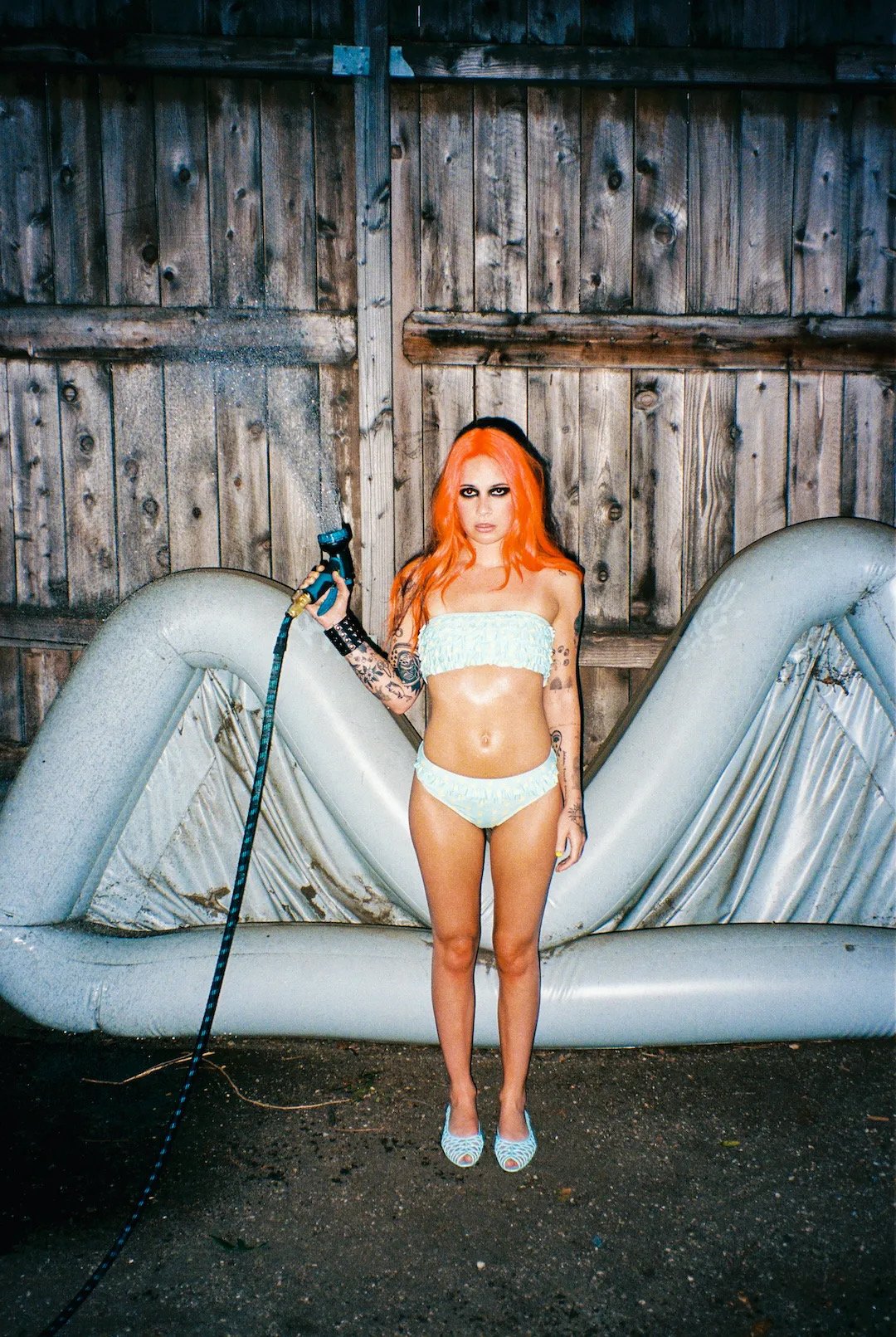
Photo via Bea Miller / Republic Records
Bea Miller has been famous for more than half her life, first as a teenager on The X Factor US, then as the voice behind certified gold tracks like ‘Fire N Gold’ and ‘like that’, and more recently for ‘Playground’, her contribution to the Arcane: League of Legends soundtrack. You’ve likely encountered her before, maybe without ever really knowing her. Well… that’s about to change, because she’s back and ready to reintroduce herself.
What happens when you hit that level of success as a teenager?
While her peers were trying to graduate, Bea Miller was already living out what she’d come to see as the high point of her career, something anyone on the outside would envy. But as we’ve seen with a lot of young stars who grew up in the spotlight, the reality underneath it is that she never got the version of adolescence everyone else takes for granted, as her teenage years were defined by work and responsibility, not school.
Her third studio album, Mr. Peaked in High School, finally gives us the bigger picture. We were lucky to speak with Miller about the new record, and about what it felt like to be young, working full-time, and at the centre of public attention instead of sitting in a classroom.
“I’m Mr. Peaked in High School, but I never even went,” Miller sings on the album. The line was lifted from ‘born to lose’, a song she and longtime collaborator Justin Tranter had just finished, and it became the frame for the entire record. It encapsulates the ironic feeling that Miller’s career peaked around age 18, a time when others are in high school, an experience she never had, and the subsequent fear that her best days were behind her. “God, like, what if that was the best it was ever going to be?” she said, describing the thought that creeps in when she sits with the title for too long. “But I can’t sit around and be sad about that anymore, because then that will be the best it ever was.”
Don’t be fooled, though. Mr. Peaked in High School doesn’t let that downward slope win. Miller’s making sure the fear of one never gets the chance to become a self-fulfilling prophecy, and taking us along for the ride.
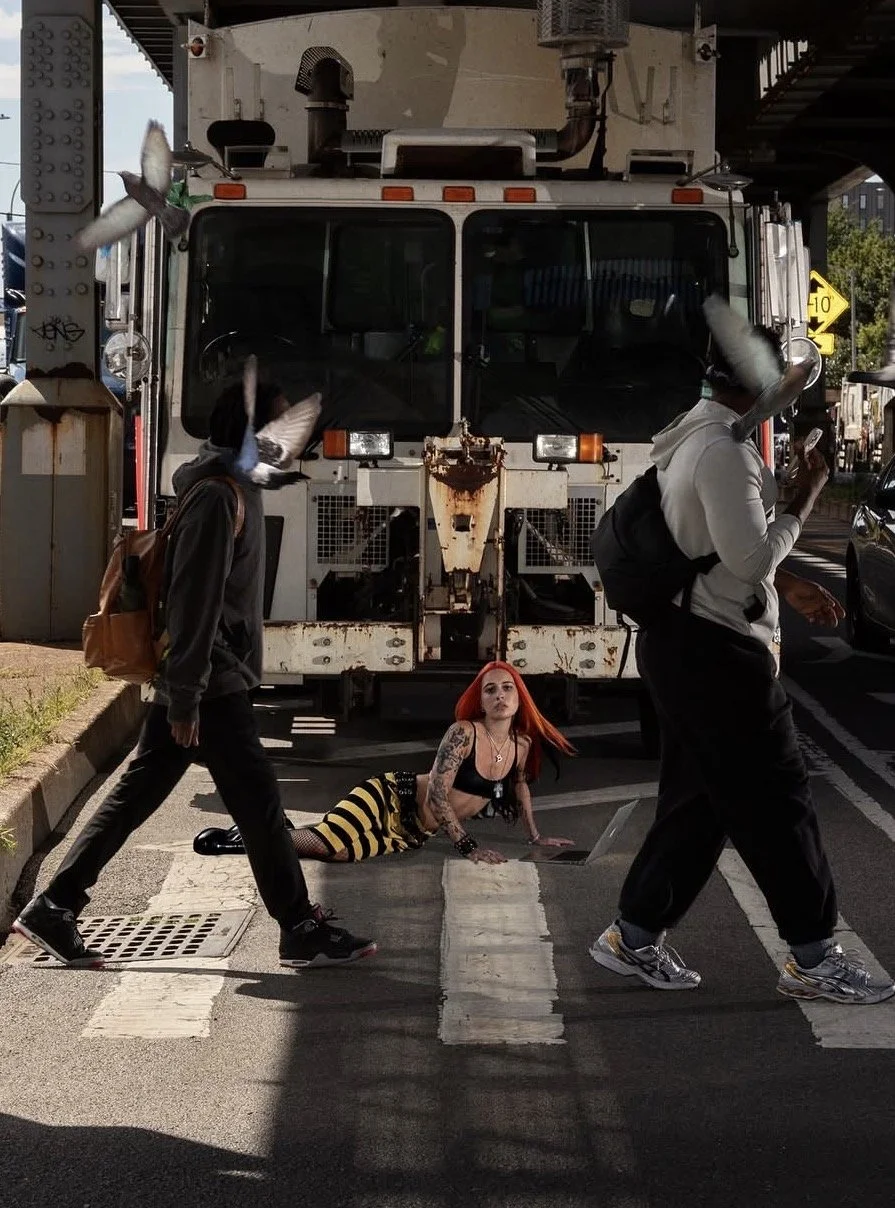
Photo via Bea Miller / Republic Records
The Disconnect Between Earlier Headlines and the Girl Living Them
Ask Bea Miller what kind of story the album tells, and she’ll tell you it’s a simple one, even if the subject matter isn’t. “It’s just very much self-reflection. It’s introspection,” she said. “I’m kind of making fun of myself a lot of the times, and I'm reflecting in a way that isn't necessarily like, oh, boohoo me. But like, this was kind of shitty, but also, ha ha.”
She calls it a time capsule of where she is right now, built from songs that are individually about very different things that add up, in sequence, to one honest account of her life. Often using satirical humour to cope with difficult or traumatic events, she addresses the disconnect between her public success and private misery during her teenage years, reflecting on feeling lonely, alienated, and angry.
For context, at fourteen, Miller and her mom moved to Huntington Beach, roughly ninety minutes from Los Angeles and from the studios where her career was happening, with none of her friends in reach and no way for a group of fourteen to fifteen-year-olds to close that gap themselves. “I was extremely lonely. I was extremely alienated,” she said. It’s a detail that’s easy to miss if you’re only tracking the professional milestones: a kid succeeding publicly, while sitting in traffic for hours a day, isolated from everyone she knew.
“It is definitely weird when your career is doing really well, and your personal life is not going very well,” she said, reflecting on the years her career was climbing. “I'm saying I peaked in high school, but I'm really only talking about my career, because my personal life certainly was not peaking. I was really fucking miserable.”
“I was angry that I didn't get to go to school with my friends. I was angry that I had to pay the bills," she said of that period. “I was so sure that I would always be that way." Looking back now, she's gentler with the version of herself who felt that way. “I feel bad for her sometimes. She was working really hard, and it was very stressful.”
The gap between the public version of her life and the private one hasn’t fully closed, she says, but at last, she can talk about it. “I can talk about the difficult memories from my past now in such an honest way without it actually affecting me negatively anymore,” she said. “It used to be like if I spoke about something that had happened to me that was horrible, it would make me feel horrible. But now I feel like I'm far enough removed from it."
And although her teenage years were unconventional and difficult, she’s clear that she wouldn’t undo any of it. “I don't think that I would have written it without having gone through the things that I've experienced,” she said of the album. Now in a better personal space, she can look back with a humorous lens, something that was encouraged by Justin Tranter, who gave her “permission to laugh” at her own experiences, a tone she hopes allows fans to discuss “the bad shit” in a “fun pop way”.
“I want to be in on the joke instead of being the joke,” she said, describing how she’s learned to preempt the ways people talk about her online. That same instinct shapes how the songs themselves are written. “It’s just like, haha, like that was so fucked up, LOL,” she said of her own coping style. “I think that’s a very common coping mechanism, and a way to reflect on your own life.” She’s hoping listeners find themselves relating to it, so the darker lyrics don’t feel like a gut-punch. “I’m hoping it's more of like a pleasant surprise," she said, “like, I'm surprised that somebody would say something like this in a pop song, but I'm also kind of relieved because I'm hoping that people relate to it."
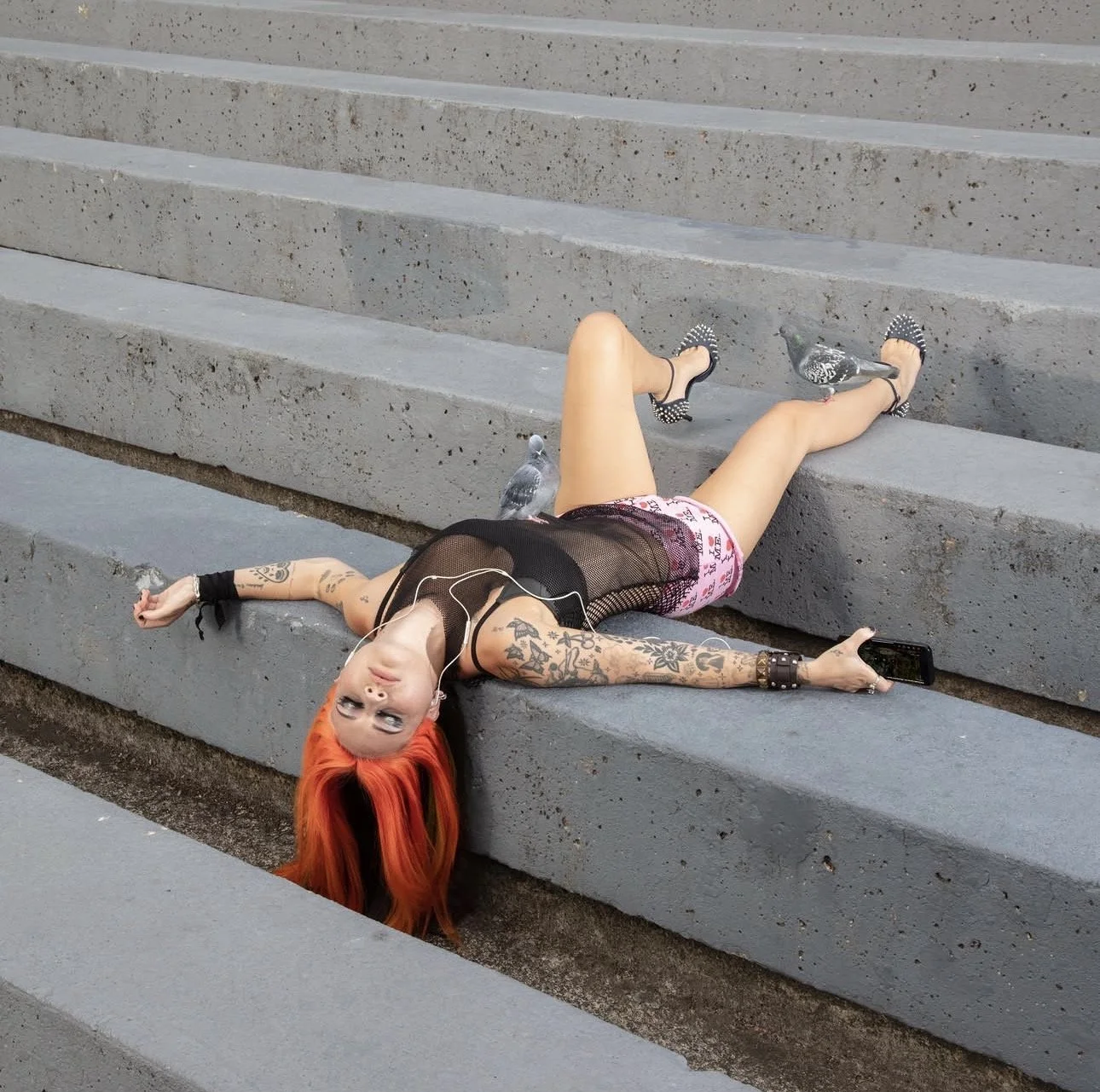
Photo via Bea Miller / Republic Records
Depression, Therapy, and Finding Inspiration in Having No Inspiration
“I was experiencing pretty severe depression and had no idea that that’s what was going on,” she said, “until my friend very lovingly pointed out, like, ‘Bitch, you’re fucking depressed.’ I thought that apathy was my new personality trait. It turns out I just needed to see a therapist.”
The years of silence between her releases weren’t so much a deliberate hiatus as something Bea Miller didn’t fully understand was happening to her at the time. “I don’t know that I realised I was intentionally taking a break," she admitted. It arrived instead through circumstance, the pandemic among them, and folded into what became a longer depressive period she didn’t recognise as one until much later. Working full-time in the studio for years, often multiple sessions a day, seven days a week, frequently alone in a room with collaborators decades older than her, had left her burnt out long before she understood why. “Having to tell people in their thirties and forties my entire life story in order to come up with an idea for a three-minute song," she said, “it just felt very soul-crushing after a while." Asking for rest, she said, hadn't come easily the first few times she'd tried.
What followed, after finally getting the rest, was a slow return to motivation, and eventually, to writing. “I actually felt a desire to be alive, and to create, for the first time in a really long time," she said. But even once she was ready to make an album, she didn't think she had anything to say. “I was like, well, I don't have any real inspiration, because what the fuck am I even gonna talk about?"
That very lack of inspiration turned out to be the engine of the whole project. Most sessions with Tranter started the same way: him asking what she wanted to write about, her insisting she had nothing. “Nothing new has happened in the last three years. Like, I don't care, like, I don't know," she'd tell him. And then, almost without fail, something she'd dismissed as unremarkable would become a song. “My biggest source of inspiration for this album was thinking that I had no inspiration," she said. It's a strange, almost funny origin story for what she now calls, without hesitation, the best work she's ever made.
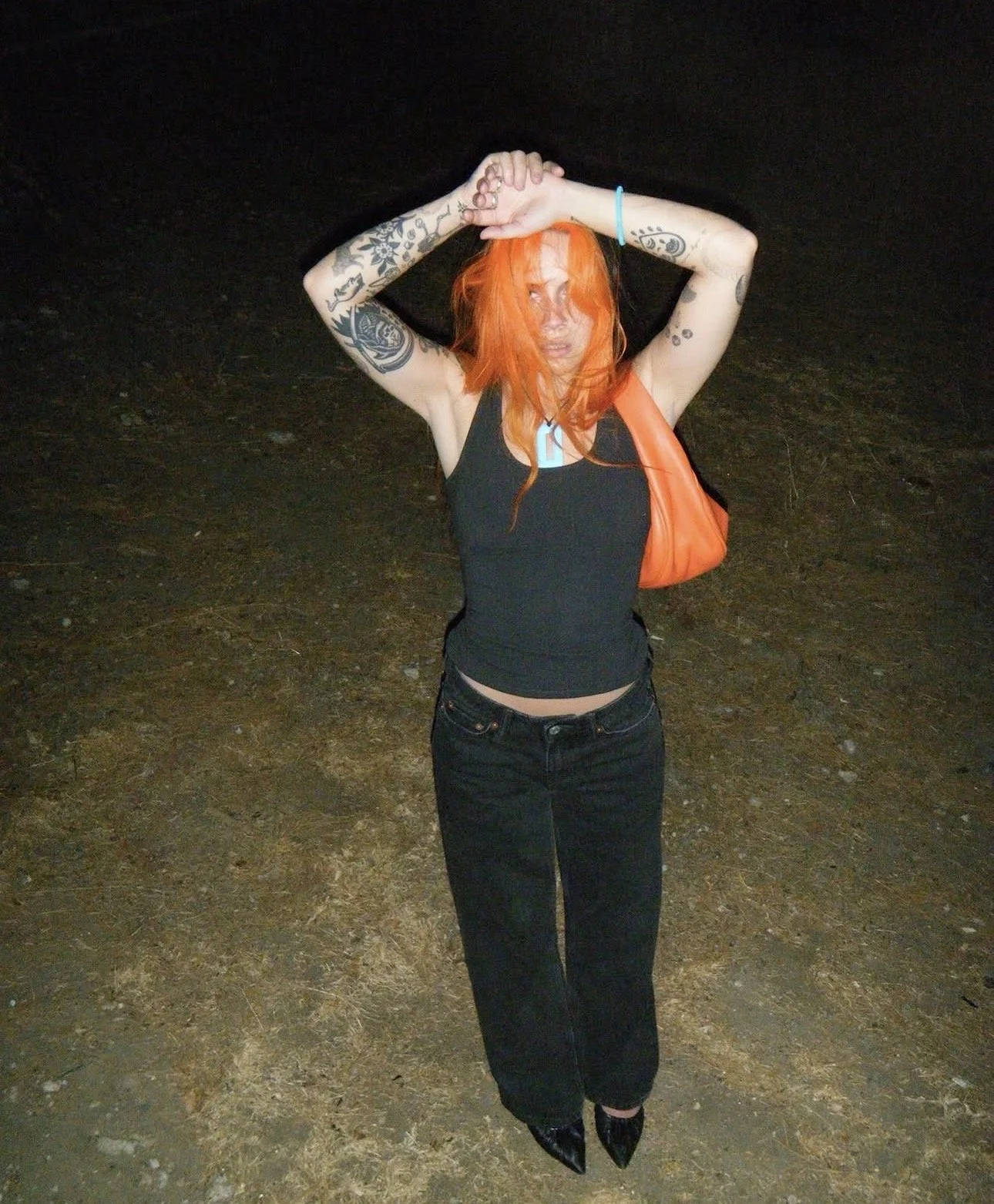
Photo via Bea Miller / Republic Records
Inside the Songs
A few individual songs came up in our call, each revealing something slightly different about how Miller writes.
First off, ‘bad person’ started with a lyric Miller almost cut for being too obvious. “Do my bad choices make me a bad person?” she sang for Tranter, immediately convinced it was the dumbest line she’d ever written. Tranter disagreed and pushed back. “I think that's why it works," she said, relaying his reasoning, “because everyone has asked themselves that question." She left it in, and it became one of her favourite songs on the record. “Sometimes asking the most obvious questions are the most universally felt sentiments," she said.
Another song on the album, ‘drunk enough’, comes from a much more specific and personal space: the tension of wondering whether a friendship has quietly become something else, and being too scared to say so out loud. In the lyrics, she wonders whether what she felt in that moment was real, something close to love, or just alcohol talking. Miller was hesitant to write it at all originally, aware that the person the song is about likely has no idea the moment ever registered with her. But she recognised the feeling as universal, even if the details weren’t. “I think that's like, you know, something I've heard all my friends [say] they've experienced," she said, “and I think is something most people go through." The uncertainty at the centre of the song, “are we, do we, wait, I don't know," is an example of the kind of unresolved, unguarded honesty that runs through the whole album.
And then there’s ‘hottest girls’, home to the musical moment Miller is proudest of on the entire record. Tucked into the bridge is a swelling, unexpected choir arrangement, built with Tranter and producer Oak Felder, that by Miller’s own admission doesn’t obviously belong there. The song itself is about a lighthearted, self-deprecating crush: she likes a girl, the girl likes someone “hotter”, and Miller shrugs it off with the resigned humour that defines so much of the record. But the production underneath tells a different story. “Every single time I would receive back a new mix of the song, I was like, bring up the choir, bring up the choir, make it louder," she told us, laughing at her own insistence. “It doesn’t really make sense in the context of the song," she admitted, “but I think it's really special, and every time I hear it, I just love it. It is truly one of my favourite parts of the album." She isn't sure the choir is mixed loud enough for it to land on a first listen, which makes it something close to a secret for her fans: a beautiful, slightly illogical flourish that rewards anyone who comes back for a second pass. “I don't know if the mix ever made it loud enough," she said (spoiler: it did, and beautifully), “but I do think it is maybe going to be an underrated moment. I just think it is so great."
Women in Pop, On the Clock
Other songs we found particularly interesting were ‘past my prime’ and ‘born to lose’, two tracks on the record that take direct aim at the way the industry treats young women as though they’re on a countdown clock, and pits them against one another almost by design.
“You gain a couple pounds, and it's in the news. You miss a note, and it's in the news," she said, describing scrutiny she doesn't see applied to men in the same space. “You sing something that is in the same genre as another pop girl on the rise, and that's a big talking point that people are mentioning. You wear something in the same colour scheme as another pop girl, and all of a sudden you're being compared left and right." She's blunt about what that adds up to. “It is extremely frustrating, and it's also, really, obviously sexist at its core."
It’s a dynamic she was pulled into long ago, when she first entered the public eye at thirteen on The X Factor US, going up against other teenage girls the show seemed determined to frame as her rivals. “These are my best friends here,” she said, recalling how she’d push back when interviewers tried to bait her into a soundbite about the competition between them. “Like, these are my girls. This is crazy." Even at thirteen, she learned to be wary of how a phrased question could be clipped down into a manufactured feud, a media instinct, she said, that's stayed with her ever since.
That early pattern of young women being set against each other rather than judged based on their own work is what she’s writing about now, as an adult. “Once you reach 25, society has created this circumstance where you feel like, oh well, now I'm old, and I'm washed," she said. “I'm laughing, but I do think that's very disturbing. I think it's a real serious problem." She's clear-eyed about the double standard underneath it too. “It's tough that when I was younger, I would get more attention from a certain type of person, and then you grow up and become a woman, and sometimes you're receiving less attention... a lot of times, men that you interact with can be disgusting, and they are more interested in you when you are young." Even knowing intellectually that the narrative is false doesn't fully protect her from feeling its weight. “As much as I know that is not true, and that I have more room to grow and so much life ahead of me, I also feel the impact of that societal message that I feel like we all experience."
It’s why the record resonates the way it does. It doesn’t sit in one register for long, but instead moves from something as pointed as this to something playful and then something tender within the space of a few tracks. It’s an album that trusts its own range, and we recommend giving the whole thing a proper listen rather than skipping to the singles.
Ready for What’s Next
Honestly, it’s exciting watching Bea Miller step back into the spotlight with something this honest. Mr. Peaked in High School doesn’t try to tie a neat bow on anything it covers, and it doesn’t need to. We’re beyond glad to have Bea back, more openly herself than ever, and we can’t wait to see where this next chapter takes her.
Mr. Peaked in High School is out now on all streaming platforms.