Photo Credit: Megan Magdalena
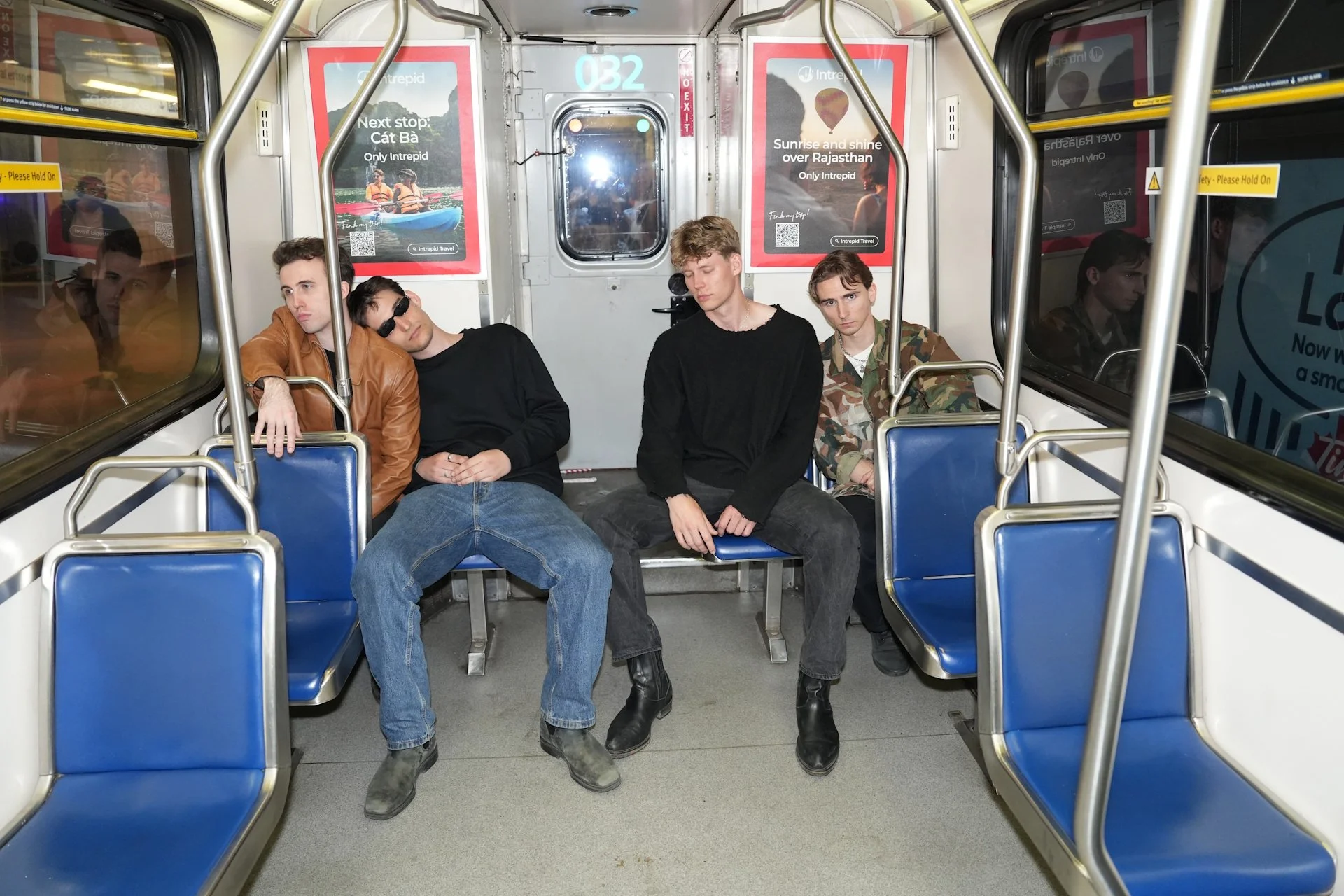
By the end of Black Pontiac’s final night of their debut London run, frontman Matt Purkiss was no longer on stage. Perched atop the speaker array during the band’s signature closing track, ‘DBTG’, he launched himself into a crowd caught somewhere between apprehension and excitement, who carried him from the front of the room to its end (and back again). The show, which took place on the 17th of October, was punctuated by moments of chaos just like this one. From performing Backstreet Boys amidst the crowd to bassist Avery Shoesmith weaving Sean Kingston into one of the band’s own classics, it felt like a fittingly reckless conclusion to two nights that had been years in the making.
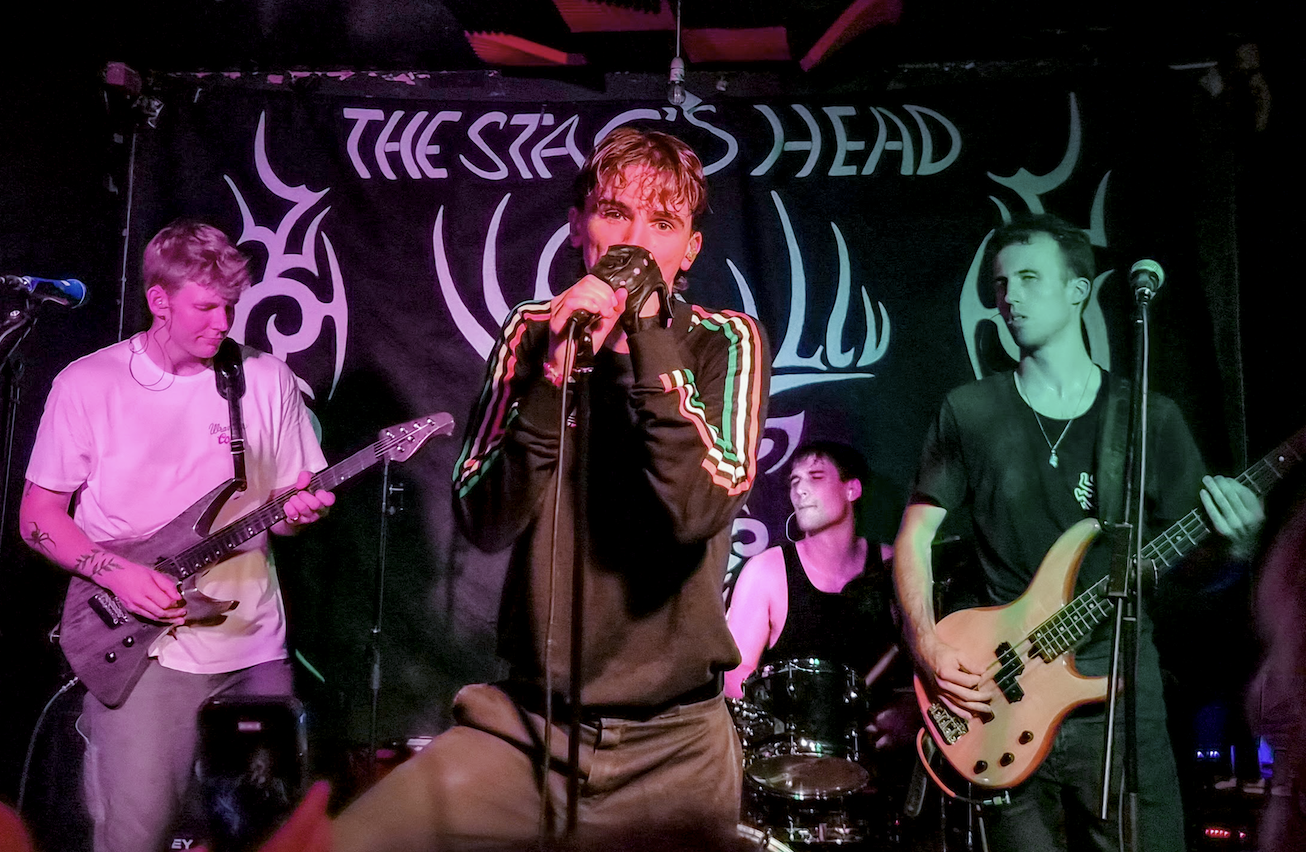
Photo Credit: Niall Mirza
When I first interviewed the Vancouver rockers years ago, I was eagerly awaiting their UK debut. As I sat down again with frontman Matt Purkiss, guitarist Mack Riddell, bassist Avery John Shoesmith, and drummer Sam Riddell, it was finally happening.
As Matt explained, everything they’ve built since “was the result of six prior years of blood, sweat and tears”. While Black Pontiac’s first EU/UK run marks a massive achievement for the band, it was one made possible in no small part by Carter Sears, frontman of opening band Sunfish and the de facto mastermind behind the tour. Joining us in the green room, he plucked his guitar absent-mindedly so as to soundtrack our conversation: “I can pinpoint the moment when it really started working... I was booking our US tour, and it started getting really easy to get venues to say yes. I’d been saying that [Black Pontiac] had 40,000 monthly listeners in the booking emails and suddenly they had 400,000 in the course of two weeks”.
The seeds of the tour were planted during a back-and-forth between an increasingly eager Carter and an increasingly convinced Matt, culminating in a conversation at Bastion Square in Victoria, where the prospect of crossing the Atlantic began to materialise. During the first song of the London encore, 'Island Honey', Matt paused midway through the opening chorus, momentarily surrendering the song to the audience, British accents and all, before the instrumentation returned. For a frontman who rarely seemed capable of standing still, there was something powerful about watching him finally stop, with six years behind him, to take it all in.
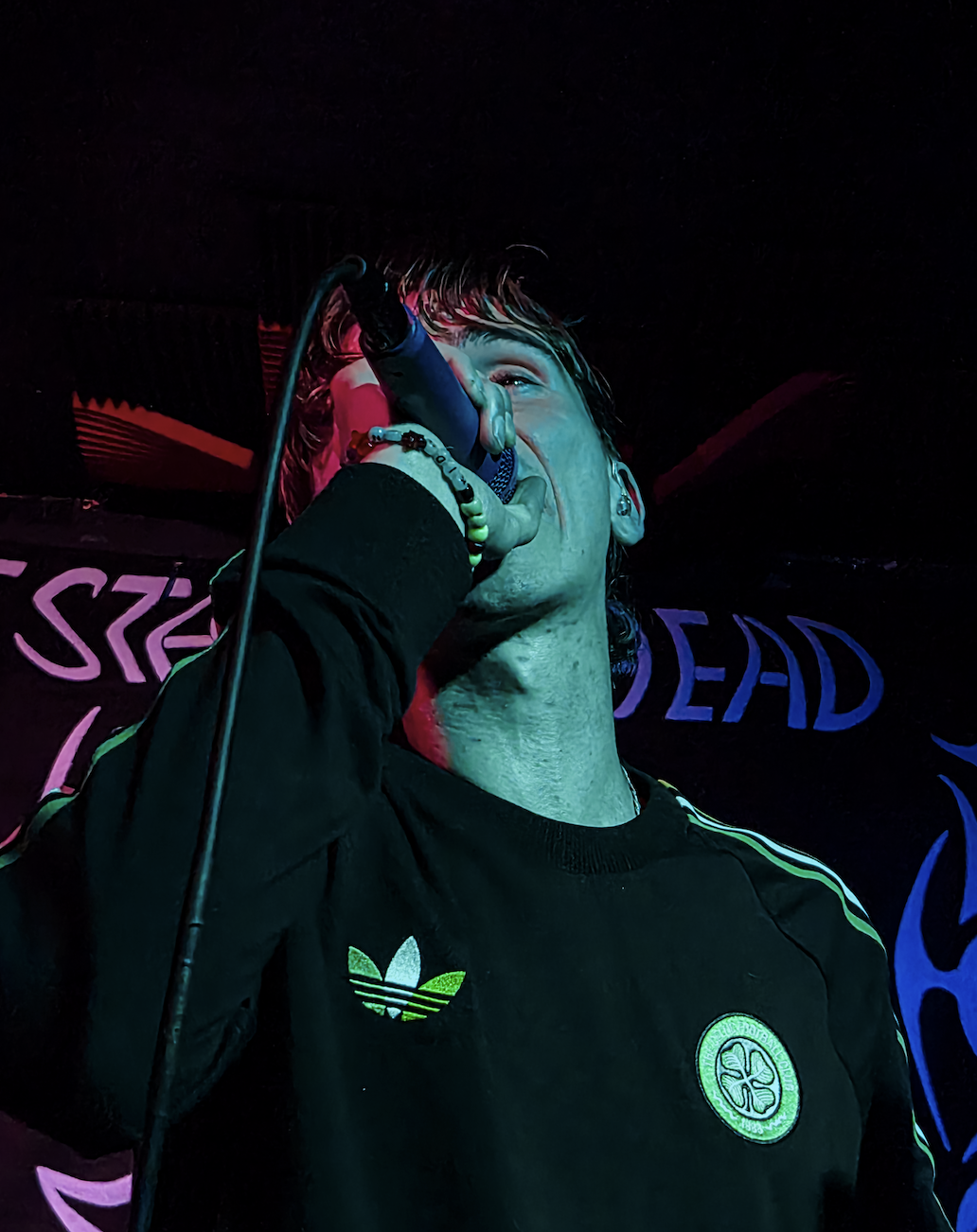
Photo Credit: Niall Mirza
The tour also reflects how Black Pontiac have expanded organically beyond the local Vancouver scene, clutching their fiercely independent ethos tight. For Matt, this means “working with people we trust and who understand what it is we're trying to do”, while Avery similarly insists on collaborators who are “stoked on the project in any regard”, whether that’s booking or production or performing on the bill. The sentiment bounced off the walls of the room, filled with people who aggressively share their vision. But while the operation has reached considerable heights, the band’s musical identity remains something of a work in progress. When we last spoke on the release of their admittedly less cohesive EP, Ponyboy 2, Matt described the ever-elusive ‘Black Pontiac sound’ as something they were still searching for. Now, with their second full-length album, A Danger to Himself and Others, I wonder whether they’re any closer to finding it.
“It's a little bit like life, right? You're always searching for yourself. Or as Bob Dylan might say, creating yourself.” - Matt Purkiss
This time around, that search has become increasingly focused, but only on the band’s own terms. Avery described A Danger to Himself and Others as their most cohesive project yet, without sacrificing the eclectic influences and genre-bending experimentation that have come to define their music. As their technical abilities develop, so too does their confidence in shaping those influences into something resembling the still-amorphous 'Black Pontiac sound'.
However, cohesion reaches beyond the album’s sonic properties. As Matt explained, some of these songs had been sitting with the band for years, eventually finding their place within a much darker exploration of the self: the Jungian shadow.
Conceptualised by psychologist Carl Jung, the shadow concerns aspects of ourselves we would rather leave unacknowledged. For Matt, it's about confronting the things we dislike about ourselves and recognising how those qualities project outwards, shaping our perceptions of the world. Across A Danger to Himself and Others, these confrontations take the form of jealousy, vanity, dependency and reckless abandon.
The tension crystallises on the album’s third track, ‘The Dare’, where two young protagonists enable one another’s pursuit of danger and validation, despite recognising their mutually assured destruction. The band also owes the album’s title to a lyric from the song (“he is a danger to himself and others all the time”), which they settled on after it was written: “sometimes you see it and you just know”.
The band’s lengthy discussions around the tracklist gave rise to the notion of ‘corners’. Matt mused on the importance of having a “banger” at tracks 1 and 6, opening each side of the vinyl. But while the band were concerned with charting the record’s corners, I'm more fascinated by the crooked path that connects them. Across Side A, the pursuit of romance, pleasure and status repeatedly conceals deeper insecurities, with recklessness and anxiety symbiotically feeding into one another. Side B introduces a revealing shift. Where ‘Sick Puppy’ directs its hostility towards another’s flaws, becoming a collective chant live as Mack and Avery encouraged the audience to spell out its title, ‘No Parachute’ turns that criticism inwards (“Could I be as bad as the actors I criticize?”). By ‘Deeper’, self-recognition begets consequence, as the narrator finds himself trapped in a cycle of destructive behaviour.
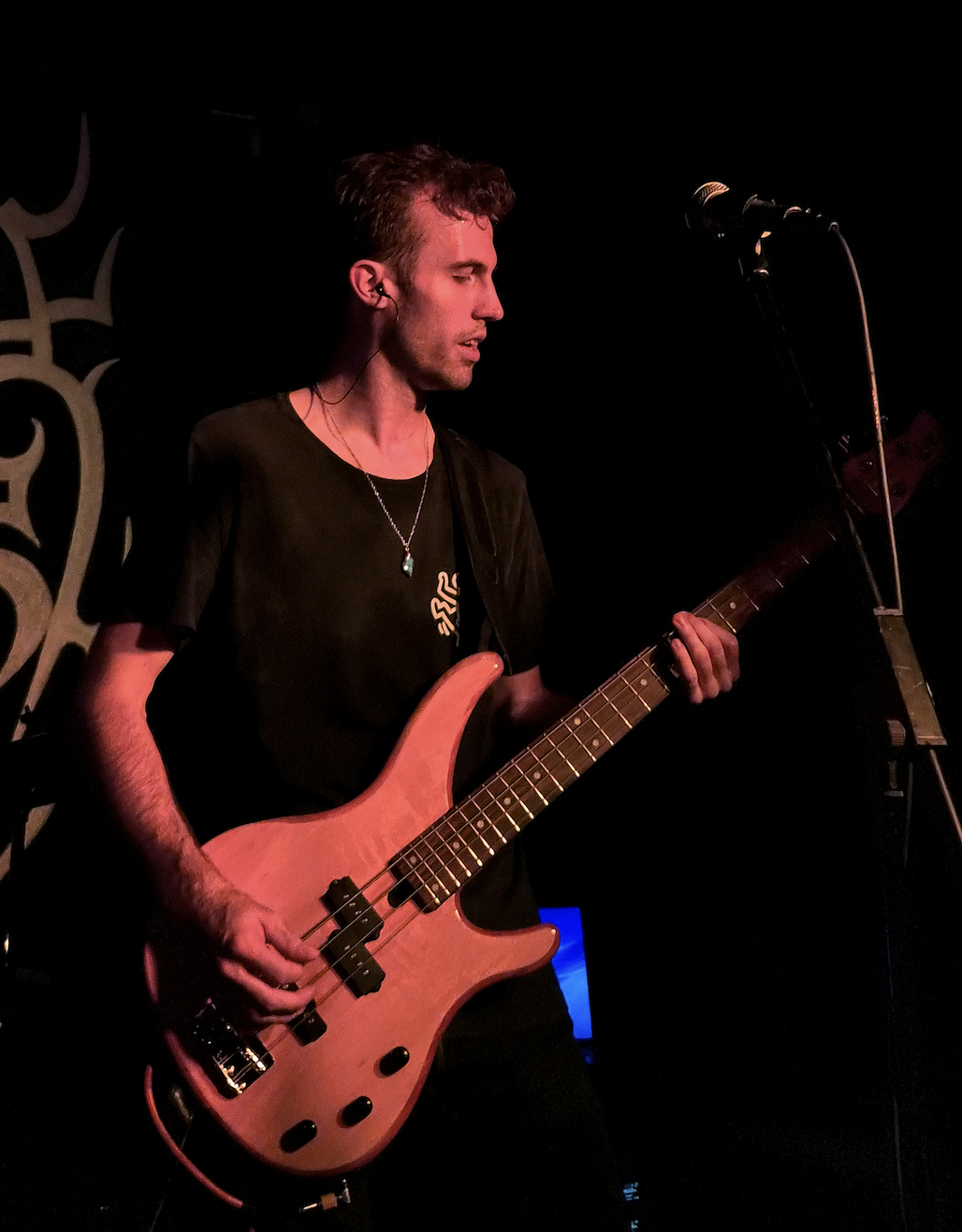
Photo Credit: Niall Mirza
Perhaps the most poignant moment on the record arrives in 'Hotel Patricia', the penultimate track and, originally, Matt's preferred closer. Its narrative follows a solitary patron in an almost-empty bar, listening to a band play as he confronts his own loneliness. The band on the bill? Black Pontiac themselves.
The song takes its name from the now-closed Pat’s Pub in downtown Vancouver, where Matt recalled playing perhaps the band’s second-ever show. Aside from the other bands, the only onlookers were the bartender and the lone man. Matt would eventually imagine the evening from that man’s perspective, turning an almost-empty room into a song about loneliness and regret. Though it predates even the band’s debut record, ‘Hotel Patricia’ continued to take shape during sessions for their second album, finding a home within its broader confrontation of the self under the Jungian shadow.
Ultimately, settling on the tracklist required the outside perspective of Michael Kenyon at Phoney Records, who helped steer the band towards a sequence they could all agree on. While 'Hotel Patricia' might have closed the album on weary introspection, the eventual closer, 'This Feeling', returns to the project’s dizzying pursuit of escape. Its narrator recognises that things have gone too far, reflecting on the trauma behind his recklessness and the exhaustion of sustaining it. Yet he finds himself exactly where he wants to be: the song's euphoric refrain landing twisted, but irresistible. However, performed live, ‘This Feeling’ feels almost disarmingly intimate. It trades the bite that characterises much of the set for restraint, allowing Avery, Mack and Sam to demonstrate a different kind of chemistry that hits even harder once the track re-ignites.
It's a fittingly unresolved conclusion to an album so preoccupied with self-contradiction. Recognising one's shadow isn't the same as escaping it, and perhaps that's what makes A Danger to Himself and Others such a compelling step in Black Pontiac's own search for identity: it doesn't pretend to have everything figured out. There's something beautiful, too, about a song born in an almost-empty Vancouver pub finding its home on the album that Black Pontiac would eventually take across the Atlantic. 'Hotel Patricia' preserves an earlier version of the band within a record shaped by everything they've since become.
If the album’s darker themes appear to almost perfectly meet their natural counterpart in its aggressive instrumentation, that wasn’t necessarily intentional. Drummer Sam Riddell recalled holding up day one of recording because he wasn’t satisfied with the microphone setup, insisting on more distant and room mics for a sound closer to the band’s live intensity. After watching him perform across two nights, I could see why. During Sam’s dedicated drum solo, Matt retreated to the steps of the stage, content to become a spectator himself, leaving the drummer to command the room. His solo moved between measured restraint and eruptive percussion, with each increasingly aggressive strike pushing the room closer towards a euphoric crescendo met by thunderous cheers.
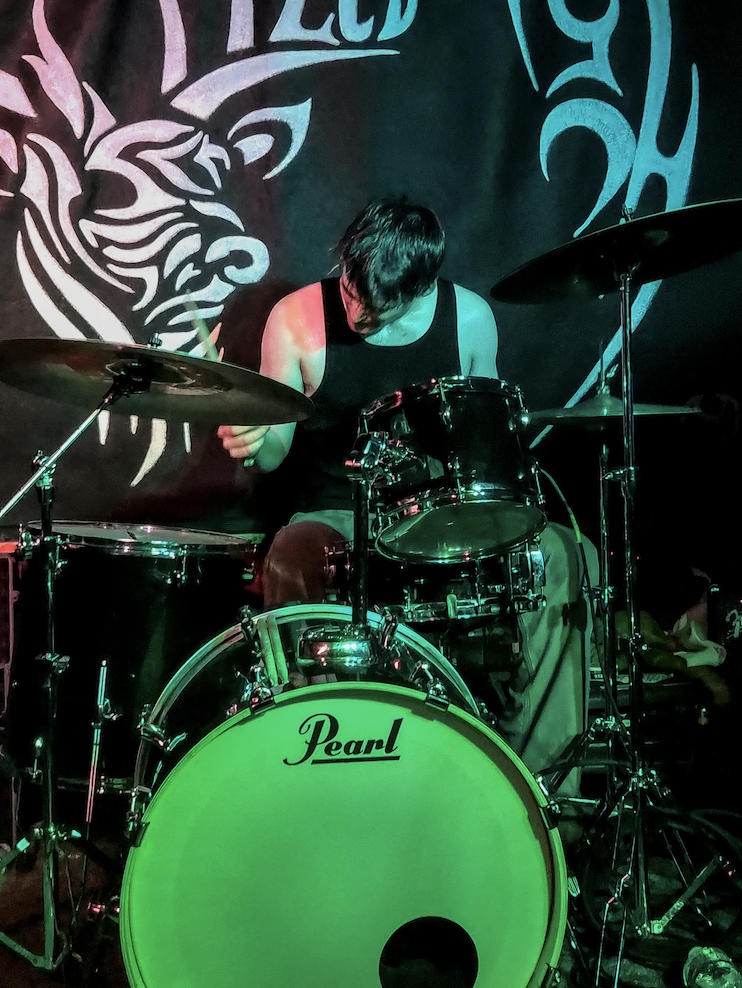
Photo Credit: Niall Mirza
While Sam’s drums, and his brother Mack Riddell’s guitars, particularly shape the record’s vigorous sound, this process partially occurred before they had even fully comprehended the record’s overarching themes. In our previous interview, Mack explained that the band’s songs often emerge through collective jamming, which anchors Matt’s assertion that the creative process in-studio is a very intuitive one.
However, sometimes the best jamming happens outside those multiple-hour-long sessions. Black Pontiac had been road-testing material from the album before it was even announced. “If we play songs before we track them…having an isolated three minutes of playing it when you’re not just going over and over again, sometimes your brain just connects dots”, reflected Avery on the practice. They’d been playing the album’s explosive opening track, ‘Number One’, as early as March 2025, allowing the song to evolve long before its eventual release. But interestingly, that evolution doesn't necessarily end once a song has been recorded. Avery mentioned playing a different bass arrangement for fan-favourite ‘Tsunami’ live, wishing that he’d incorporated the new approach in the studio before the song was tracked and released three years ago.
Reflecting on both anecdotes, Matt succinctly observed that “a song when it's recorded is almost a time capsule”. Consequently, he likened the live experience instead to a tradition of music continually reshaped through performance, where neither the person playing nor the person listening is ever quite the same from one encounter to the next. “It’s a little bit like theatre”, he added, referencing a theme that consumes the album and manifests concretely in the record’s liner notes, with Shakespeare’s iconic “all the world’s a stage”.
Across two different stages, then, between The Grace in Highbury and The Stag’s Head in Hoxton, Black Pontiac delivered two markedly different productions. The first was closer to a long-awaited hit parade, while the second ventured further into the band’s back-catalogue, swapping the explosive ‘Number One’ for the equally-energetic deep-cut ‘Go Go Hollywood’ as its opening track. Live, Matt certainly seemed to relish the theatricality that runs throughout the album. On ‘Soul Suicide’, he inhabited this almost hubristic rockstar persona. On ‘Soda Pop Rock’, he demanded that the entire room open up a pit with increasing urgency, to which we eagerly obliged.
Yet the spectacle is hardly his to bear alone. Mack’s guitar solos, particularly on ‘Call Me Lover’ and ‘The Streets Are Hot Tonight’, became embodied performances in themselves, his instrument almost an extension of his body. On Night 2, both he and Avery punctuated older favourites like ‘Crackhawk Down’ and ‘Pink Eye’ with shouted adlibs that played effortlessly into the band’s garage-rock appeal. Even the encore became a playful negotiation: as the audience demanded one more song, Matt peeked out from backstage, raised a single finger, then changed it to two. The crowd adjusted its demand accordingly: “two more songs”.
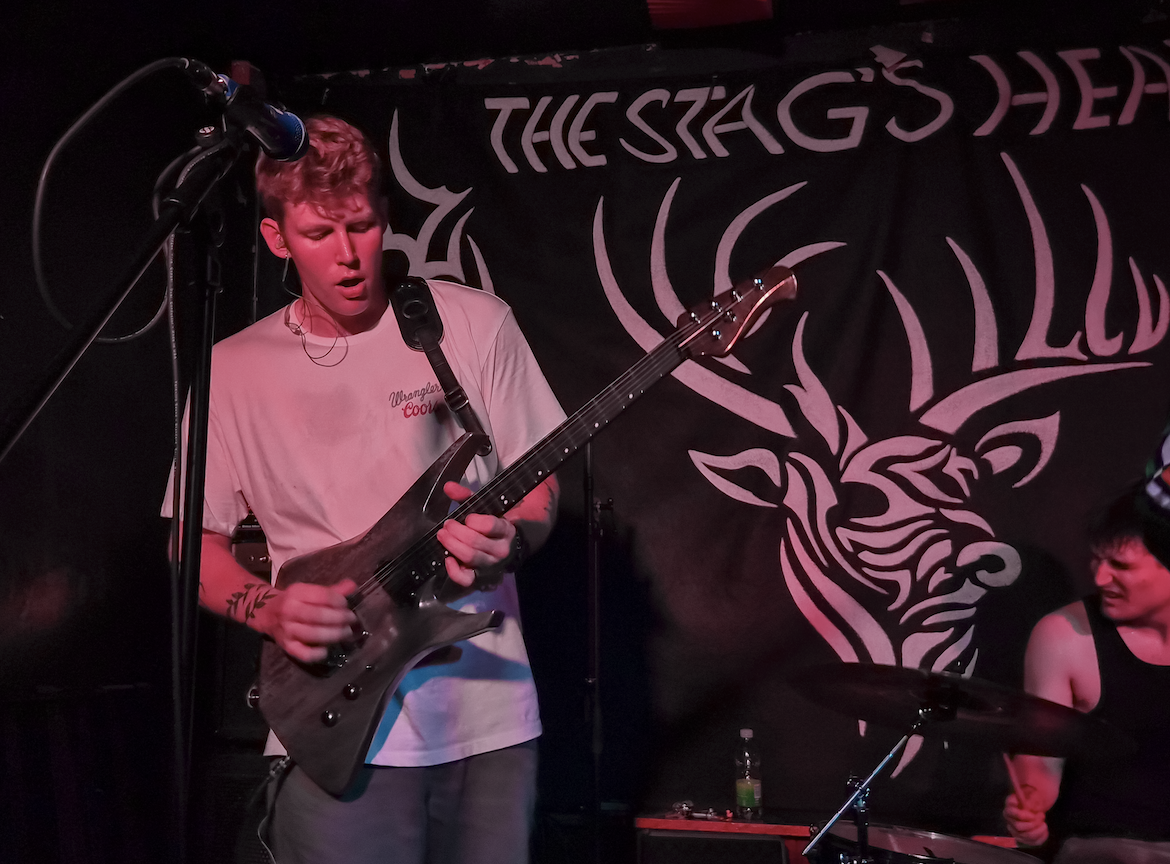
Photo Credit: Niall Mirza
For all its chaos, there’s a remarkable reciprocity to a Black Pontiac show: a feeling that you’re among friends from the crowd to the stage, until the boundary between performer and spectator almost disappears. On songs like ‘Call Me Lover’ and ‘Elevation’, the audience became another voice in the band, while at other moments Matt froze, letting cheers wash over him before throwing himself back into the music at full-force. When I asked what the band hoped audiences would take away from the shows, Sam offered a simple answer: “Sweat”. “A fun, rowdy bash”, he added. Avery, meanwhile, acknowledged a raw energy that the band have yet to fully capture on record, one that their live performances deserve.
When I first spoke to Matt two years ago, he described his hope that a Black Pontiac concert could feel akin to a religious experience. Bringing the show to London for the first time, between Backstreet Boys and stage-diving off speakers, two packed rooms finally understood what he meant.
The experience has less to do with worship in the traditional sense than with the privilege of offering people momentary escape. Matt recalled one particularly tough show in Atlanta, where swollen vocal cords left him struggling to perform. In spite of that, audience members approached him to express how much the performance had meant to them and how it had helped them work through difficult periods in their lives. Once a song leaves the stage, it belongs as much to the audience as it does to the musicians. What a band takes away from a performance isn't necessarily what a crowd receives.
This beautiful contradiction echoes those identified thematically on A Danger to Himself and Others: Black Pontiac explore the destructive search for escape, often trapping themselves in the very feelings they long to chase. But on-stage, that same reckless energy becomes something altogether more communal. Through shouted refrains, open moshpits, or literally carrying Matt across the room, the crowd borrows from the album’s themes to co-create the show’s central pull. Perhaps the almost religious experience isn't about forgetting yourself entirely, but finding something worth losing yourself in, even if only for an evening.
Somewhere between an almost-empty Pat’s Pub in Vancouver and two packed-out nights in London, Black Pontiac have found an audience willing to stick around. I think back fondly to those London rooms: rooms full of people who knew the words well enough that Matt didn’t even have to sing them all. Yes, the band might still be searching for the elusive ‘Black Pontiac sound’, but perhaps its meaning has always been as much for their audience to discover as for the band to define.
Back in the green room, as our conversation drew to a close, I left space for the room to have its final say. For all the time we’d just spent talking about Black Pontiac, it was refreshing when Courtney Lane of Sunfish delivered it instead. Turning momentarily away from their intricate, mesmerising make-up routine, they spoke with all the enthusiasm of a show still waiting to happen: “Fuck yeah, London, let's go!”