
Madra Salach Updates the Irish Ballad on IT'S A HELL OF AN AGE
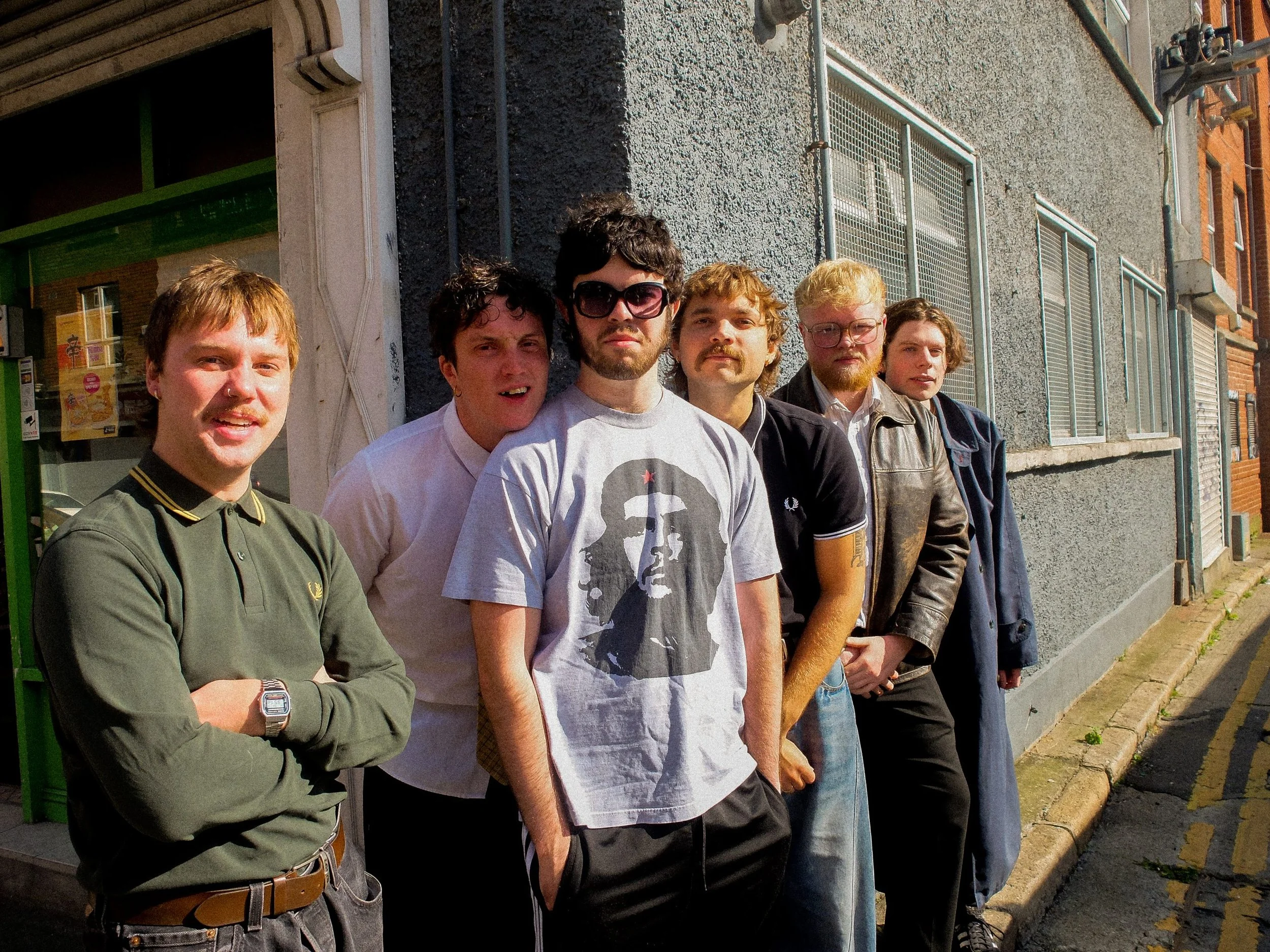
‘They were six young lads who became best friends’ is the touching tagline on Madra Salach’s Spotify profile, and the only real information offered about their otherwise mysterious presence. Adding to that mystique, for those who aren’t fluent in Irish, is their name - Madra Salach translates to ‘Dirty Dog’. It demands your attention, and you’d be foolish not to give it the time it asks for.
The six-piece group from Dublin have been quietly carving out a place for themselves in Ireland’s ever-growing folk music scene. They didn’t arrive with a marketing campaign, yet the interest in them began long before their first EP, It’s a Hell of an Age, was released. The lads spent countless late nights playing in local pubs, covering Irish folk ballads that history had half-forgotten, before gradually weaving some of their original tracks into their sets. Soon, Madra Salach were the words on everyone’s lips. Their rise has felt rooted in word of mouth - in people stumbling into a live show and leaving changed. It feels especially fitting for a genre built on oral tradition.
Before long, there was a clear appetite for an EP from a growing audience who wanted something to sit with when they weren’t packed into a pub hearing it live. That’s where It’s a Hell of an Age comes in.
Released on 23 January, their debut EP plants itself firmly within modern Irish folk. These are contemporary stories told through a traditional lens, steeped in longing, mourning, restlessness, and quiet desperation. Whether it’s grief for a lover or for a version of life that never quite arrived, the emotional through-line feels consistent.
The EP opens with a low, ominous swell of the harmonium on ‘Blue & Gold’. It holds you in suspension, lingering in that uneasy space before it fully begins. Then Paul Banks’ voice cuts through - gritty, unwavering, and unfiltered. It has a timeless quality, and for a moment, it could be 1910 or 2026. Until he starts singing about a scratch card.
But never has a young man
Been ever so wealthy
As I'm about to be
With my blue and gold
When the penny drops that ‘Blue & Gold’ refers not to romance or memory but a scratch card, the song shifts. Lyrically, it sits on a similar cynical plane to something The Dubliners might have toyed with. But here, there’s no humour cushioning it. There’s no wink to the audience. Instead, it becomes something heavier - the cycle of spending what you don’t have on the promise of rescue. It’s hardly a new temptation, but in today’s climate, it lands differently. The track continues to build steadily - drums, mandolin, and acoustic guitar stacking into an arresting cacophony - before falling away to lead into ‘Spancil Hill’.
‘Spancil Hill’, originally written by Michael Considine, is a song steeped in its own tragedy. Considine emigrated to California in his late teens and wrote the poem about his home village before dying at just 23, never knowing the life it would take on in Irish folk. Madra Salach have leaned into that weight. Their version feels darker and less sentimental than the renditions that have come before them. The tin whistle adds an almost ethereal thread, lifting the listener into another time while keeping them anchored to the ground with homesickness.
Next comes ‘I Was Just A Boy’, an epic and unflinching reflection on adolescence, clocking in at seven minutes and 24 seconds. It unfolds patiently, a gradual crescendo with thickening texture that mirrors the confusion and overwhelm of youth. There’s nothing neat about it. It feels exposed, unresolved, and that’s precisely why it works.
The wind-down leads into what feels like the EP’s centrepiece, ‘The Man Who Seeks Pleasure’. It’s striking in its simplicity. Once again, the harmonium opens the door, joined by the gentle sound of falling rain. Banks’ voice is softer here, more vulnerable.
I knelt down to kiss you
Lick the sugar off the cane
For the man who seeks pleasure
Is the man who seeks pain
The repetition of the title line in each verse gives the song a circular, almost hymn-like quality. It doesn’t move forward in a conventional sense; instead, it deepens. When the acoustic guitar eventually enters, it shifts the tonal ambiguity slightly, grounding the track before it swells once more. As the instrumentation thickens and Banks’ voice strains, there’s a palpable sense of yearning. And when it finally recedes, as quietly as it began, something in the air feels altered.
The closing track, ‘Murphy Can Never Go Home’, returns to basics - a voice and a guitar, telling a story of Irish migrant labourers in Britain who cannot return home. It’s sung plainly, without embellishment, which only sharpens its sense of isolation. As a final note, it doesn’t attempt drama. It simply sits with you.
It’s a Hell of an Age feels best absorbed slowly. It’s a record preoccupied with longing - for money, for love, for home, for a version of yourself that might never exist again. Madra Salach don’t polish those feelings into something neat or comforting. They let them remain rough around the edges. And that restraint, that refusal to overstate and embellish, is exactly what makes the EP feel heavier in the silence that comes after.