Runnner Live in London: Noah Weinman on Writing His Way Home

Photo by Jessie Lamworth / @jamworth
On July 3, Runnner returned to London with nothing more than a guitar in hand.
We caught up with Noah Weinman, the musician behind the Runnner project, almost a year after the release of his last album, A Welcome Kind of Weakness. He's just finished mastering his next record. Thirty songs have whittled down to thirteen, concluding months of writing through winter to spring. It’s safe to say Runnner has spent the past year doing little else besides making and performing music. Now, he's trying to convince himself to slow down.
The exhaustion makes sense once you contextualise the year Runnner has just had. The album brought him to the UK with release shows in August, to a US tour wrapping in October, and in November, he was already working away at his next project. A Welcome Kind of Weakness was produced entirely in a studio in LA, where Noah lived. This time, he returned to the slower tinkering home-based process, offline and isolated in Connecticut. Away from the city and the pull of LA’s gig culture, he removed the outside influences that could, in his words, “dangerously convolute" his vision. Then, he waited. Waited for his own instincts to kick back in. Standing on-stage in a St. Pancras church with an acoustic guitar, it became obvious that they had.
"It snowed last night back in Ohio / I'm in LA and warm, but it's so fucking dry though."
The show opened with the quaint, drifting first lines of ‘Monochrome', a track written years ago, yet one that still captures Noah's disconnect from Los Angeles that influenced his escape. It was an opening that felt almost serendipitous in its relevance, imperfectly yet flawlessly tied to our earlier conversation. The frustrated narrator felt increasingly distant from the person standing on stage that night, with a looseness and ease that felt much more self-assured. Determined to preserve an intimacy that spotlights his work old and new.
If the album was made in a space of intimacy and chance, the performance ran on that exact same principle, and the setlist, speckled with audience-shouted requests, became a testament to it. Earlier, Noah had told me he had little interest in polished performances. There's always going to be one fan who wants to hear a certain song, however obscure. As he put it cheekily, “If I play a song and fuck it up, that's okay because I didn't practice it." The idea works precisely because of its imperfections. In a full band show, it means frantically locking eyes to make sure everyone's on the same page. But when he’s alone, it means revelling in a discography built up over years, knowing even the most ‘out-there’ requests like the back of his hand.
The requested tracks of the night – ‘Spackle', ‘Eggshell', ‘Chamomile' (“yeah, that's a hard one"), ‘Awash' and ‘Ur Name on a Grain of Rice' – were complemented by three new songs from the unannounced forthcoming project, and felt just as much a celebration of his catalogue as a whole. One unreleased track, ‘Daffodil', built on a cathartic angst reminiscent of older Runnner tracks like ‘Eggshell', taking it to soaring vocal heights that intensified without a full band. Its central question, “Is it erasable?", quietly echoed the ideas we'd spent the evening discussing.
The live set thrived on the dynamic of restraint and release, using nothing but voice and guitar to create startling shifts in intensity, going from zero to a hundred almost immediately. Performing ‘Eggshell' on the night, Noah stripped away the solitary guitar to sing a cappella, almost nervously flowing through the silent church. His voice and guitar then charged up and expanded across the room on the lyric, “But I'm young, I should just fucking enjoy this shit," practically bouncing off every wall.
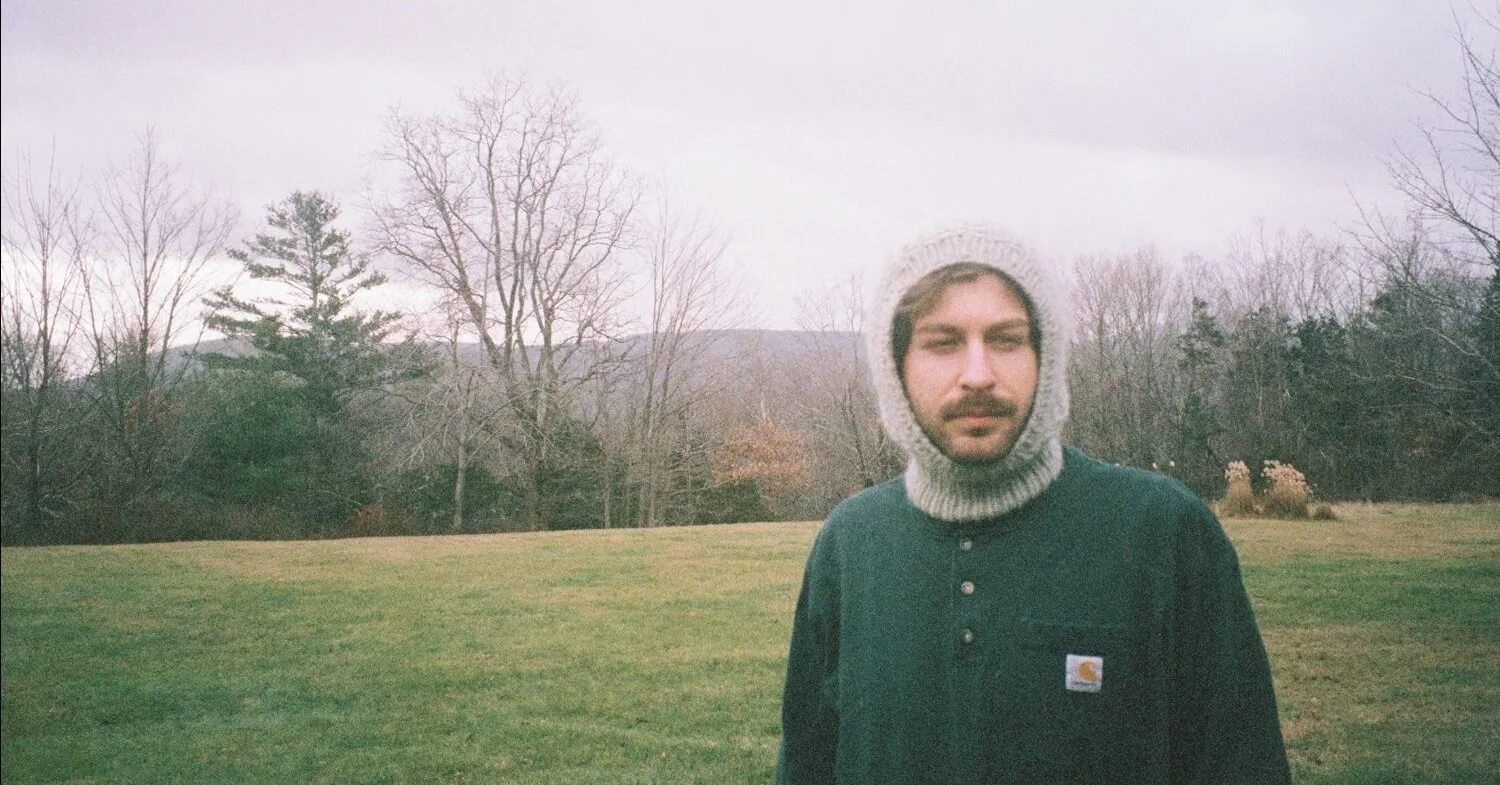
Photo by Helen Ballentine
The unreleased material pushed the evening's themes further. ‘Used To Be Funny' carried a plain honesty in the line “I'm mostly agnostic, but sometimes it's music," anchored by one simple refrain: “I'm coming home." Written on airport napkins, the song felt stitched together from fragments, closer in spirit to a diary entry and somehow sounding both patchworked and completely assured. Runnner is coming home, in more ways than one.
It all ties back to how the album was created. Tinkering away from the studio and the online world, the album mirrors the way Noah created his debut, like dying stars, we're reaching out, and its companion ambient project, starsdust. ‘Used To Be Funny' declares, “I'm made of stardust and I still find so much time to be sad," but nowhere is this made more on-the-nose than in the third unreleased song, aptly titled ‘star’. I hesitate to call this nostalgia, it felt instead like a continuation. “I'm coming home" landed like ploughing forward. Perhaps that's why Runnner’s move towards independence, after his expired contract with indie label Run For Cover, feels like a natural conclusion and not a gamble.
During our conversation, Noah expressed uncertainty around this next chapter for Runnner. It would be his first time releasing a full project without label support, and he wasn't sure if people would be able to find the music in the same way. But these new songs didn't sound uncertain; they sounded settled. They sounded like the restraint before the release in songs like ‘Eggshell’ and ‘Daffodil’. The common thread through it all was that Noah was at the helm, taking control.
As he stands today, Noah Weinman’s busy year was only made busier beyond Runnner. As a producer, he left Noah-shaped fingerprints on the latest projects from Gigi Perez and Hana Eid. He also produced his very own instrumental project, In An Empty House With Open Windows, a love letter to his old room before moving to New York, under the moniker nnnoah. Rather than drawing firm boundaries between his projects, he seems content in letting each idea reveal where it belongs in its own time. Whether furthering someone else’s vision, materialising ideas that come to him fully-formed, or engaging with the album process, Runnner creates pockets of unique and co-existing experiences. He lets his live shows reveal themselves in the same way.
By the final requests, the room could barely agree on what they wanted to hear next. The final exchange concluded with ‘Awash', melded with a cover of ‘Can You Stand the Rain' by Boyz II Men, honouring the way he used to play the song back when he didn't have enough music to fill a live set. It was a memory that felt almost ironic now, as overlapping requests filled the room.
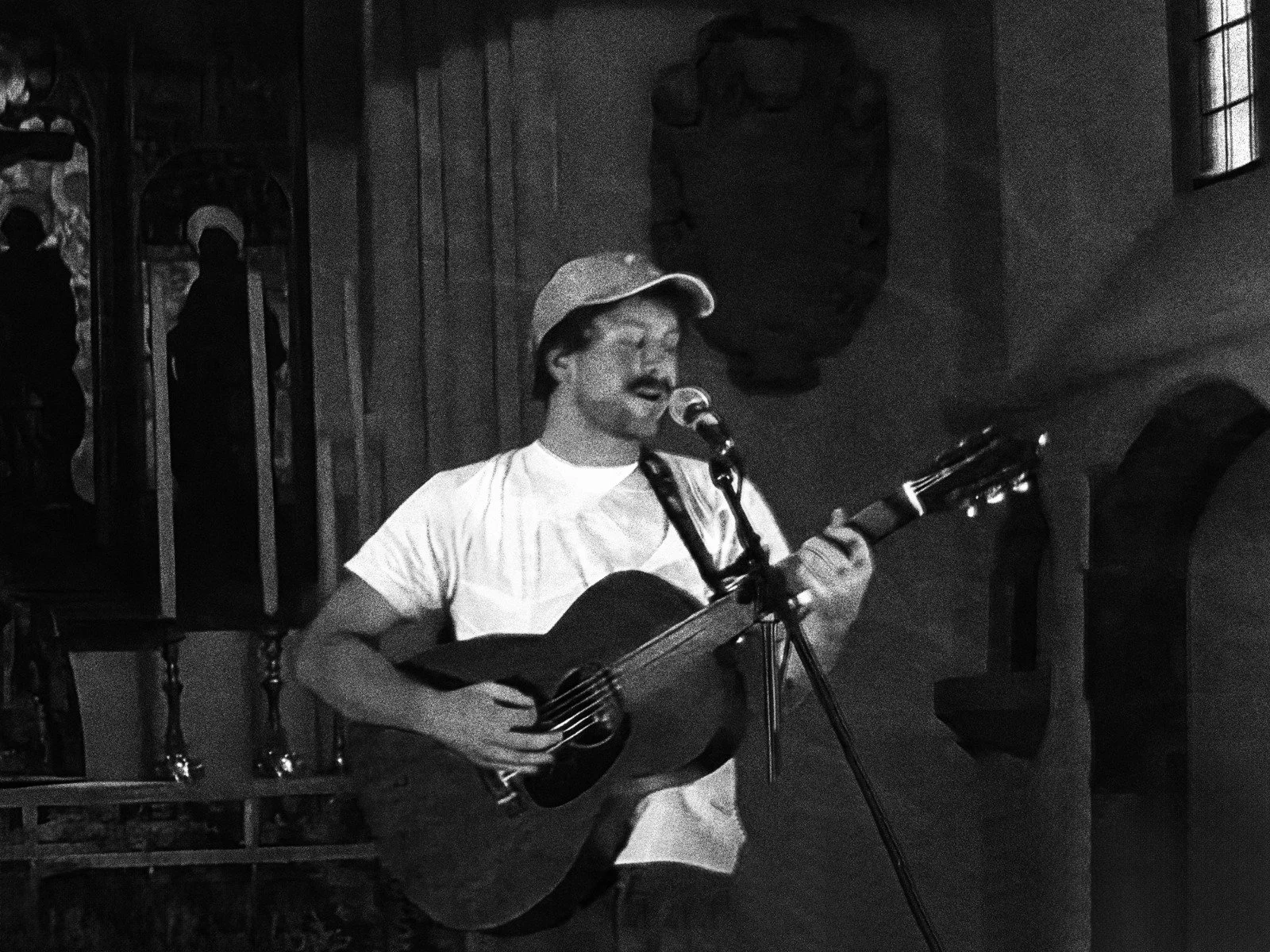
Photo by Niall Mirza
Finally, the room agreed to close on what's often considered Runnner's magnum opus, ‘Ur Name on a Grain of Rice'. “You're invited to sing along if you'd like," Noah said, bookending the evening in exactly the same spirit it was created: Together. His voice expanded out in the cathartic release of the song, meeting the audience who sang eagerly, but also carefully, listening out for Runnner's final notes.
Earlier that evening, Noah had spoken about leaving Los Angeles and trying to strip away every outside voice until he could hear his own again. Somehow, the show arrived at the opposite conclusion. The more honestly Runnner spoke in his own voice, the easier it became for everyone else to join in.